Background
tTG-IgG (tissue transglutaminase IgG) is an antibody that the body produces as an immune response. For people with celiac disease, this antibody is produced after the ingestion of gluten. These antibodies lead to inflammation of the small intestine, which can cause villous atrophy1. The most widely used serologic test for diagnosing celiac disease targets tTG-IgA, but 2.6% of patients with celiac disease are IgA-deficient. Additionally, individuals with selective IgA deficiency have a 10- to 15-fold increased risk of developing celiac disease compared to those who are not IgA deficient2. For patients who are IgA-deficient, tTG-IgG tests are performed and aid in the diagnostic process3.
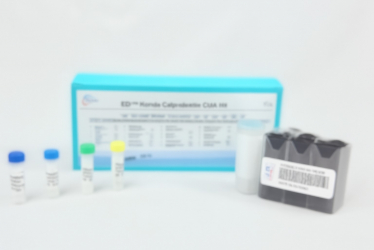
This CLIA is designed, developed, and produced for the quantitative measurement of human tTG-IgG in Serum samples. The assay utilizes a two-site “sandwich” technique with one antigen and one antibody that bind to different epitopes and paratopes of tTG-IgG.
Assay calibrators, controls, or patient samples are added directly to a reaction vessel containing streptavidin coated magnetic particles. An acridinium ester antibody and a biotin antigen are added. The magnetic particles capture the biotin antigen as well as an immuno complex in the form of “magnetic particles – biotin tTG-IgG antigen –tTG-IgG– acridinium ester tTG-IgG antibody”.
The materials bound to the solid phase are held in a magnetic field while unbound materials are washed away. Then, the trigger solution is added to the reaction vessel and light generated by the reaction is measured with the ECL100 or ECL25 analyzer. The relative light units (RLU) are proportional to the concentration of tTG-IgG in the sample. The amount of analyte in the sample is determined from a stored, multi-point calibration curve and reported in serum tTG-IgG concentration.